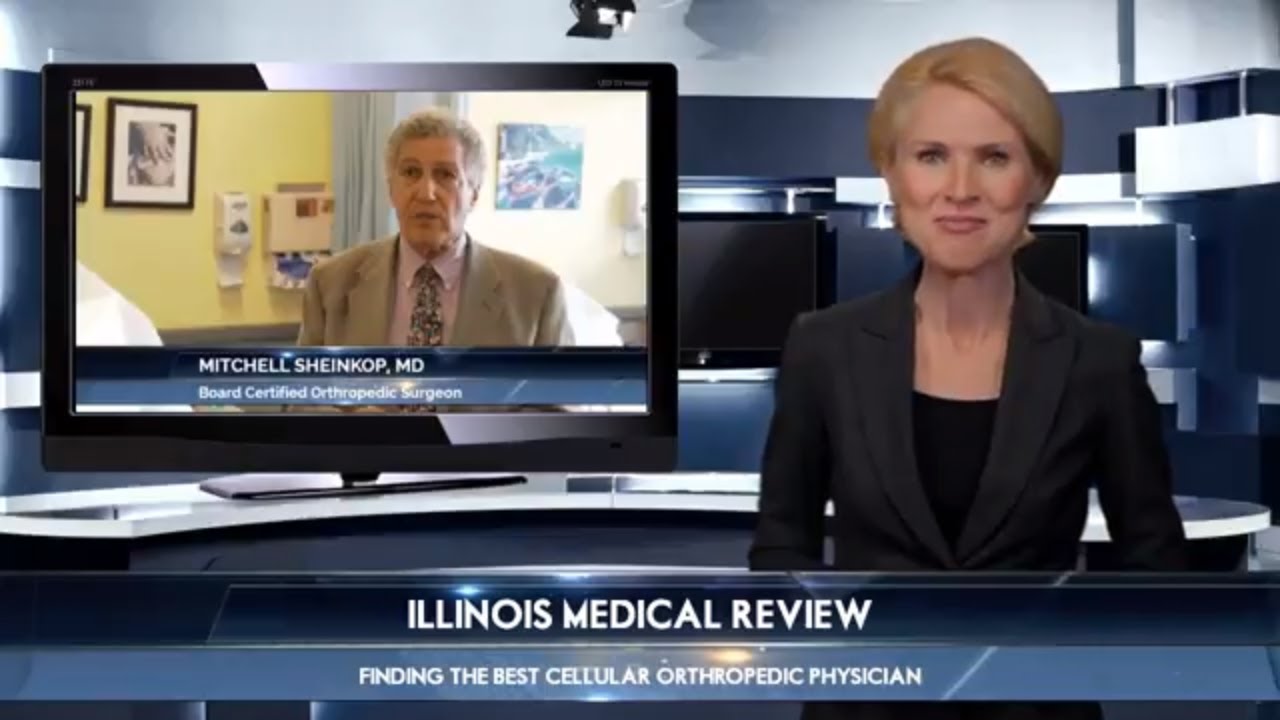
Posted by Mitchell B. Sheinkop, M.D. in Regenerative Pain Center on May 22, 2012
Outcomes Data of Bone Marrow Stem Cells to Treat Hip and Knee Osteoarthritis
This study is currently recruiting participants.
Verified May 2012 by Regenerative Pain Center, Illinois
First Received on May 14, 2012. Last Updated on May 16, 2012 History of Changes
|
Sponsor: |
Regenerative Pain Center, Illinois |
|
Information provided by (Responsible Party): |
Regenerative Pain Center, Illinois |
|
ClinicalTrials.gov Identifier: |
NCT01601951 |
Purpose
The purpose of this study is to determine if Bone Marrow Concentrate may be successful in the treatment of osteoarthritis. Bone Marrow Concentrate is known to contain a community of cells that has been shown to have “regenerative” properties. This study is designed to evaluate the short-term clinical and x-ray outcomes of injections for hip and knee osteoarthritis.
Inclusion Criteria:
- Subjects must be scheduled for an autologous bone marrow hip or knee injection
- Subjects must have a diagnosis of hip or knee osteoarthritis
- Subjects must be between the ages of 18 and 85
- Subjects must be willing and able to sign Informed Consent
- Subjects must be willing and able to return for scheduled follow-up evaluations
Exclusion Criteria:
- Subjects who have had any type of visco-supplementation in the treated joint within the last three months prior to enrollment
- Subjects for whom baseline data is not available
| Hip and Knee Osteoarthritis | Other: Procedural, Bone Marrow concentrate injection |
| Study Type: | Observational |
| Study Design: | Observational Model: Cohort Time Perspective: Prospective |
| Official Title: | Autologous Bone Marrow Concentrate Database Outcomes Research Project |
Resource links provided by NLM:
MedlinePlus related topics: Osteoarthritis
Further study details as provided by Regenerative Pain Center, Illinois:
Primary Outcome Measures:
- Visual Analog Pain Scale [ Time Frame: Baseline, 6 weeks, 3 months, 1 year ] [ Designated as safety issue: No ]
Change in subjective pain measure
- Harris Hip Score or Knee Society Score [ Time Frame: Baeline, 6 weeks, 3 months, 1 year ] [ Designated as safety issue: No ]
Change in subjective pain, function, functional activity measurement and a clinical physical exam
- Physician Global Assessment [ Time Frame: Baseline, 6 weeks, 3 months, 1 year ] [ Designated as safety issue: No ]
Change in physician rated disease activity measurement
Secondary Outcome Measures:
- Radiologic [ Time Frame: Baseline, 1 year ] [ Designated as safety issue: No ]
Radiographic changes of the hip or knee
| Estimated Enrollment: | 15 |
| Study Start Date: | April 2012 |
| Hip Osteoarthritis | Other: Procedural, Bone Marrow concentrate injection
This is strictly data collection and outcomes based. The procedure is not part of this study |
| Knee Osteoarthritis | Other: Procedural, Bone Marrow concentrate injection
This is strictly data collection and outcomes based. The procedure is not part of this study |
Eligibility
| Ages Eligible for Study: | 18 Years to 85 Years |
| Genders Eligible for Study: | Both |
| Accepts Healthy Volunteers: | No |
| Sampling Method: | Non-Probability Sample |
Study Population
Orthopedic clinic, those with a diagnosis of hip or knee osteoarthritis, scheduled for an Autologous Bone Marrow injection
Criteria
Inclusion Criteria:
- Subjects must be scheduled for an autologous bone marrow hip or knee injection
- Subjects must have a diagnosis of hip or knee osteoarthritis
- Subjects must be between the ages of 18 and 85
- Subjects must be willing and able to sign Informed Consent
- Subjects must be willing and able to return for scheduled follow-up evaluations
Exclusion Criteria:
- Subjects who have had any type of visco-supplementation in the treated joint within the last three months prior to enrollment
- Subjects for whom baseline data is not available
Contacts and Locations
Please refer to this study by its ClinicalTrials.gov identifier: NCT01601951
Contacts
| Contact: Mary Langhenry, PT | 312-475-1896 | mlanghenry@yahoo.com |
| Contact: Jennifer Kelly | 312-475-2958 | jkelly@weil4feet.com |
Locations
| United States, Illinois | |
| Regenerative Pain Center | Recruiting |
| Des Plaines, Illinois, United States, 60016 | |
| Principal Investigator: Mitchell Sheinkop, M.D. | |
Sponsors and Collaborators
Regenerative Pain Center, Illinois
Investigators
| Principal Investigator: | Mitchell Sheinkop, M.D. | Regenerative Pain Center |
More Information
No publications provided
| Responsible Party: | Regenerative Pain Center, Illinois |
| ClinicalTrials.gov Identifier: | NCT01601951 History of Changes |
| Other Study ID Numbers: | MM-01 |
| Study First Received: | May 14, 2012 |
| Last Updated: | May 16, 2012 |
| Health Authority: | United States: Institutional Review Board |
Keywords provided by Regenerative Pain Center, Illinois:
| Osteoarthritis Stem Cell Injections Bone Marrow Autologous |
Additional relevant MeSH terms:
| Osteoarthritis Osteoarthritis, Knee Arthritis |
Joint Diseases Musculoskeletal Diseases Rheumatic Diseases |
ClinicalTrials.gov processed this record on May 20, 2012
Mitchell B. Sheinkop, M.D.
847-390-7666 or 312-475-1893
1565 N. LaSalle Street . Chicago . Illinois . 60610
Regenerative Medicine and Stem Cell Informed Consent
Posted by Mitchell B. Sheinkop, M.D. in Stem Cells on May 16, 2012
Assume you have read my blog or learned from the web about our ethos – don’t just recover, conquer. You have scheduled an appointment, undergone the assessment, completed X-rays and the MRI and I have determined that you are a candidate for a regenerative medical procedure for your arthritis. The next step is informed consent.
While there is no data that allows me to promise that I can cause your cartilage to re-grow, there is ample evidence-Regenexx has over 5,000 cases-that allows me to say it is more likely than not that your bone marrow aspirated and concentrated adult mesenchymal stem cells may reduce or eliminate your pain and improve your function. One hope of stem cell treatment is influencing cartilage repair; unlikely though after, age 50. On the other hand, I have a new approach being instituted, arthroscopic debridement with stem cell repair. As an orthopedic surgeon, this will be one of my contributions to the new world. As far though as altering the bio-immune response of the synovium in the arthritic joint, there is little question and that is why I am willing to say that within a reasonable degree of medical certainty, I can minimize or eliminate your pain. Now you ask at what risk? As of now, there are two downsides as no procedure is risk free. Associated with any invasive procedure including minimally invasive needling is the risk of infection. While we only use a needle, it is an invasive procedure. Regenexx to the best of my knowledge has not experienced any deep infections in association with their outcomes surveillance. Second, there are a certain percentage of patients who do not respond as hoped. The revision intervention for superficial infection is an antibiotic; for failure it is a repeat attempt at Regenerative Medicine or a joint replacement. To date in the closely monitored outcomes of the 5,000 Regenexx patients, no tumor growth has been reported. Please keep in mind that your adult cells are reintroduced in to a closed environment, a capsulated joint. I repeat the Regenexx experience and data because theirs is the only outcomes evidence available. All other approaches and all other companies have depended on anecdote in the absence of gathering scientific evidence.
To the best of my knowledge, the cost of Regenerative Medicine is assumed by the patient. No insurance carrier and certainly not Medicare at this time will pay for stem cell management of arthritis. If the aspiration of your bone marrow and the concentration thereof is done under IRB oversight, we are in complete accordance with FDA governance. Someday, the indemnification community may choose to cover Regenerative Medicine, especially when our studies demonstrate the cost savings when compared to a total joint replacement. The global charge for a joint implant runs between $45,000 and $60,000; a revision, about $70,00 to $120,000. Should an infection ensue, the costs may go up by another $150,000 additional. Then there is rehabilitation; Regenerative Medicine is a matter of weeks, not months as in a joint replacement
What about outcomes; am I really able to compare those of stem cell management with a total joint replacement? Watch Kobi Bryant in the NBA playoffs or Alex Rodriguez, as third baseman for the New York Yankees. If you want to learn more, call and schedule an appointment. In my new website, where I hope to become your resource for Regenerative Medicine, there will be a section of new patient stories and the results of treatment. Stay tuned.
Mitchell B. Sheinkop, M.D.
1565 N. LaSalle Street . Chicago . Illinois . 60610
847.390.7666 or 312.475.1893
Arthroscopic Treatment of Osteoarthritis doesn’t work
Posted by Mitchell B. Sheinkop, M.D. in Hip Arthroscopy, knee, Osteoarthritis, Stem Cells on May 1, 2012
Might minimally invasive stem-cell treatment for conditions causing knee or hip pain secondary to common injuries or other degenerative problems be a substitute treatment for arthroscopy or even total joint replacement? If you are experiencing joint impairment and the MRI is “positive”, the pain is most probably due to the bio-immune and inflammatory changes of degenerative joint disease and “wear and tear” arthritis rather than a torn meniscus or acetabular labrum. You may want to investigate Bone Marrow Concentrate derived stem cell management rather than undergoing a surgical procedure of the hip or knee.
Traditional options for patients suffering from joint pain and altered life style include arthroscopic surgery or total joint replacement. With both surgeries, months of rehab are required, the outcome is not guaranteed and the patient must be aware of and prepared to take on the risks.
Original Article
Incidental Meniscal Findings on Knee MRI in Middle-Aged and Elderly Persons
Martin Englund, M.D., Ph.D., Ali Guermazi, M.D., Daniel Gale, M.D., David J. Hunter, M.B.,B.S., Ph.D., Piran Aliabadi, M.D., Margaret Clancy, M.P.H., and David T. Felson, M.D., M.P.H.
N Engl J Med 2008; 359:1108-1115September 11, 2008
Magnetic resonance imaging (MRI) of the knee is often performed in patients who have knee symptoms of unclear cause. When meniscal tears are found, it is commonly assumed that the symptoms are attributable to them. The prevalence of a meniscal tear or of meniscal destruction in the painful knee as detected on MRI ranged from 19% (95% confidence interval [CI], 15 to 24) among women 50 to 59 years of age to 56% (95% CI, 46 to 66) among men 70 to 90 years of age. Among persons with radiographic evidence of osteoarthritis (Kellgren–Lawrence grade 2 or higher, on a scale of 0 to 4, with higher numbers indicating more definite signs of osteoarthritis), the prevalence of a meniscal tear was 63% among those with knee pain, aching, or stiffness on most days and 60% among those without these symptoms. The corresponding prevalence among persons without radiographic evidence of osteoarthritis was 32% and 23%. Sixty-one percent of the subjects who had meniscal tears in their knees had not had any pain, aching, or stiffness during the previous month.
Conclusions
Incidental meniscal findings on MRI of the knee are common in the general population and increase with increasing age.
What about the hip? Leah Ochoa published an article in CORR, 2010 that 87% of patients with hip pain have at least one finding of Femoral Acetabular Impingement on X-ray with a high rate of labral tears found on asymptomatic volunteers. The message, if you have less than 2mm of joint space on an X-ray, the problem does not lend itself to hip arthroscopy. If you have any reduced motion of your hip and a “positive” MRI for a labral tear, don’t treat the MRI, look further. Might stem cell management help avoid or postpone surgery? Call to learn more
Mitchell B. Sheinkop, M.D.
1565 N. LaSalle Street . Chicago . Illinois . 60610
312-475-1893
The Botox for your frame, Stem Cells
Posted by Mitchell B. Sheinkop, M.D. in Osteoarthritis, Platelet Rich Plasma, Stem Cells on April 25, 2012
Musculoskeletal Care of the Mature Patient
The number one reason in the United States for a trip to a physician has to do with pain arising in the musculoskeletal system, especially in the Boomers and maturing athletes. Might regenerative medicine and stem cells provide an extended warranty for your frame? That was my basic question when I attended the American Academy of Orthopedic Surgeons continued medical education course last weekend “Advances in Care of the Aging Athlete”. What was generally reinforced is that the number one way to stay healthy and young is through fitness and sports; stay active on an aging frame. In other words put old on hold. Certainly proper nutrition is a key component as is Resveratrol and maybe testosterone supplementation for Manopause. Woman beware, hormone replacement therapy is generally not good for your health.
In the end though, the real problem is cartilage deterioration with age be it from genetics, congenital, developmental insult or trauma. The recent media attention to stem cells has introduced a clinical possibility of changing the natural history of progression of degenerative arthritis and perhaps even reversing the programmed death of cells. Peyton Manning went to Europe for stem cells in the neck, Governor Perry chose Asia for his back and Terrell Owens returned to football after stem cell intervention in Korea. You all probably are aware of the Fred Couples, Kobe Bryant and Alex Rodriguez having returned to top performance with the assistance of regenerative medicine. By harvesting Mesenchymal Stem cells form you bone marrow and concentrating them, the injectate is the best of all potential immune modulators with the greatest possible ant-inflammatory effect. There are a large number of animal studies confirming the efficacy of stem cell management of cartilage; such clinical treatment is now the standard of care in the veterinarian world, particularly with the injured or arthritic hoarse. As well, there is an emerging body of science to support adult mesenchymal derived stem cell management of the aging human joint appearing in peer reviewed medical journals. The International Journal of Rheumatic Diseases to illustrate, recently published an article concerning four patients with moderate to severe osteoarthritis of the knee who experienced marked improvement with mesenchymal stem cell therapy. The problem is that for the most part, human clinical trials are taking place outside the United States. Enter Regenexx and its IRB clinical trial. That’s why I joined the Regenexx Network. To learn more, schedule an appointment.
Stem cells are how we all begin
Posted by Mitchell B. Sheinkop, M.D. in Platelet Rich Plasma, Stem Cells on April 19, 2012
The Regenerative Pain Center is about to begin as well. I completed my training at Regenexx on Thursday and started enrolling patients on Friday. I chose to affiliate with Regenexx because theirs is the longest and largest outcomes database pertaining to the clinical use of stem cells in the care and treatment of arthritis and musculoskeletal injury. Certainly, there remains a major role for orthopedic surgery in the management of arthritis and joint injury but now the patient has an option. Given the fact that 15 to 20% of joint replacement recipients have complication or unsatisfactory outcomes or are never able to resume the type of activity previously enjoyed, it makes all the sense in the world to exhaust the regenerative care option before a joint replacement. While I was writing this Blog, my landlord dropped by to tell me the saga of his son-in-law’s father. The latter, a surgeon himself, still is experiencing pain and repeated hemorrhage into his knee eight months after a knee replacement. The ongoing problem is contributing, in part, to his decision to retire. Might he have avoided a knee replacement if he had tried the regenerative medicine route?
The world of stem cell management is a commitment for me because I believe in the process. It is also dynamic, as another means of approach has been introduced for stem cell harvesting that is very promising and less complicated than bone marrow harvesting. Blood born stem cells may now be captured by concentrating platelet rich plasma. Until now, PRP, while having some stem cell component, was really an anti-inflammatory approach because of a wealth of growth factors. With the recent introduction of a major advance in platelet concentration methodology by Regenexx, ultra concentrated PRP, introduces a potential sufficient quantity of stem cells to begin to mirror the possibilities of bone marrow derived stem cells.
To complete my preparation and credentialing for the transition from a reconstructive joint replacement surgeon to a regenerative medicine restoration physician, I am off to the American Academy of Orthopedic Surgeons course “Advances in Care of the Aging Athlete” on Thursday. In addition to stem cells, the subject matter includes Nutrition and Supplementation: Optimization with Aging; Anti-Aging and Performance Drugs; Cartilage Restoration; Knee Rehabilitation in the Arthritic Knee: How Much Can We Push?; The Basic Science of Aging: Implications for the Male and Female Master Athlete; Injectable Adjunctive Therapies: Solid Treatment or Snake Oil: Performance Optimization in the Masters’ Athlete; and more. I won’t live forever; but while I am still here, my ethos is “Just Do It”. To learn more, call and schedule an appointment.
Mitchell B. Sheinkop, M.D.
847-390-7666 or 312-475-1893
1565 N. LaSalle St., Chicago, Illinois 60610
On Restoration, Regeneration and Resurrection
Posted by Mitchell B. Sheinkop, M.D. in Hip Pain, knee, Osteoarthritis, Stem Cells on April 3, 2012
Musculoskeletal Care of the Mature Patient
I feel the pain. This weekend was spent with my wife chasing trout in the Driftless Area of southwestern Wisconsin and I am hurting. Walking down a creek for miles is an adventure that is unlike no other. I have no idea what this has to do with stem cells so let’s get back to the week to be, actually the month ahead.
Passover begins in the evening of Friday, April 6 and ends in the evening of Saturday, April 14
Easter is Sunday, April 8
Regenexx visit is Monday, April 9 to Wednesday, April 11
Biovision needlescope introductory to regenerative medicine, April 12
American Academy of Orthopedic Surgery course “Advances in Care of the Aging Athelete” April 20 to April 22
I am undertaking an entire new direction as an orthopedic surgeon who performed and pioneered joint replacements for over 38 years. All I had to do was read the newspaper and listen to the media reports on orthopedic implant recalls to remind myself that someone from the orthopedic surgical community has to look ahead to alternative options for pain solutions. The AAOS course will address issues from stem cell and adjunctive therapies, nutrition, performance enhancing drugs, cutting edge regenerative and restorative treatments, and the application of other anti-aging substances and supplements for the shoulder, hip and knee-all with the goal of keeping patients well and at the top of their game. If you are severely impaired, then you still may need a joint replacement; but if you are still functional, there are viable alternatives to surgery. For the female athlete, I am developing an expanded approach to treatment and maintaining the opportunity to participate. My focus is personal and is somewhat brought about by my own interests, anti-aging and managing the aging process. Normal physiologic effects of aging affect participation in sports; reader, you are left to define the word sports. There is not necessarily a predictable positive impact of a joint replacement on function even if the implant is not recalled. If you want to analyze how cartilage regenerative techniques may apply to you in the new world of regenerative stem cell based medicine, call for an appointment. I will work with you to determine appropriate non-operative and minimally invasive stem cell treatment plans for mature adult “athletes” with traumatic, degenerative and arthritic conditions particularly related to the knee, hip and shoulder.
Mitchell B. Sheinkop, M.D.
847-390-7666 or 312-475-1893
1564 N. La Salle St
Chicago, Illinois 60610
Announcement!
Posted by Mitchell B. Sheinkop, M.D. in Regenerative Pain Center on March 20, 2012
We are pleased to announce that Dr. Sheinkop is a member of the Regenexx Physician Network.
Dr. Sheinkop is taking this week off so stay tuned for more information March 25, 2012
For an appointment please call
847-390-7666
1565 N. LaSalle St., Chicago, Illinois, 60610
Saving umbilical cord blood
Posted by Mitchell B. Sheinkop, M.D. in Cord Blood, Osteoarthritis, Regenerative Pain Center, Stem Cells on March 15, 2012
In the beginning, there was an umbilical cord. The blood in that cord was and is an invaluable source of stem cells that is unique to your body and family. These cells may be used to treat nearly 80 serious medical conditions at last count including leukemia, other cancers, and blood disorders. Cord blood stem cells are showing significant potential to treat conditions that have no cure today as juvenile diabetes and brain injury. Saving your baby’s or your grandchild’s cord blood secures the best treatment option for a healthy future.
According to the U.S. Department of Health and Human Services, “This revolutionary technology (regenerative medicine) has the potential to develop therapies for previously untreatable conditions. Examples of diseases regenerative medicine can cure include diabetes, heart disease, renal failure, osteoporosis, and spinal cord injuries. I am now ready to announce my personal entry into the new world of regenerative medicine in conjunction with the Regenerative pain Center by having joined the Regenexx network of physicians. I will start screening patients for bone marrow concentrate pilot study as of March 25th. The actual clinical process will be introduced at the beginning of May at the Regenerative Pain Center. There is as yet no assurance that bone marrow concentrate rich with autologous mesenchymal adult stem cells administered in to an arthritic joint will reverse arthritis or even stop progression but with the anecdotal observations around the country, I believe that as an orthopedic surgeon, I might or could be able to delay or avoid a joint replacement. Our pilot study will be the first step. In order to qualify, a patient will need to meet certain criteria determined by history, physical examination, X-ray and MRI. At times, a diagnostic out patient arthroscopic examination or prior treatment may be part of the program. For those who don’t qualify for the study, the patient may still seek treatment with a self-pay alternative.
Transplant medicine uses stem cells to help treat serious diseases, such as cancers and blood disorders. Regenerative medicine is a new and rapidly advancing area of medicine focusing on developing treatments using stem cells to repair damaged tissues and organs. The estimates to date that someone in your family will use stem cells in a lifetime include:
Transplant Medicine: 1 in 217
Regenerative Medicine: 1 in 3
I am thrilled to announce my entry in to the emerging stem cell application regenerative process. To learn more or see if you qualify, call the number listed below.
Mitchell B. Sheinkop, M.D.
847-390-7666
1565 N. LaSalle St., Chicago, Illinois, 60610